• Home
  • Blog
    • Peonies
    • Cabbages
    • Ferns
    • Hostas
    • Roses
    • Hydrangeas
  • About
  • Contact
  • Subscribe
Menu

The Observant Gardener

Street Address
City, State, Zip
Phone Number
Judith Canty Graves

Your Custom Text Here

The Observant Gardener

  • Home
  • Blog
  • Galleries
    • Peonies
    • Cabbages
    • Ferns
    • Hostas
    • Roses
    • Hydrangeas
  • About
  • Contact
  • Subscribe

Sunflower Delight

September 24, 2021 Judith Canty Graves
A very tall sunflower with an orange center and yellow petals

I find comfort in contemplating the sunflowers. - Vincent van Gogh

The sunflower is one of my favorite flowers. Known as Helianthus, this name is derived from the Greek word helios, meaning sun, and anthos, meaning flower. Every year I grow a variety of sunflowers. They are fascinating plants with their cheerful faces and many shapes and colors that delight people all over the world.

I enjoy watching the sunflowers grow and mature, reaching for the sky. As they create buds, they produce spiky green leaves called bracts that appear on the edge of the flower head. Slowly the petals of the flower open in the warm sun. Once the petals are open, they cover the bracts from the front. Then the flower show begins and it can last through August and into September.

Sunflowers are Inspirational

The story you learned as a child, that sunflowers follow the sun all day is true, but only for the young plants. Once the flower blooms, the plant will only face east. Because young sunflowers follow the sun, many cultures see them as symbolic of loyalty, faith, and spirituality. Also many people find the way that they stand tall and upright inspirational.

A few years ago I decided to collect seeds from a variety of sunflowers to experiment with different heights, colors, and size of bloom. Look at any garden catalog and you will get a sense of the great variety that is available. Their are many choices, from compact, smaller sunflowers to ones that grow over ten feet tall. Before you buy, be sure to read the seed packet carefully to understand how high a particular sunflower can grow.

Many Types of Sunflowers

I like to try different sizes, especially the tall varieties. The dilemma is choosing which ones to plant and where to plant them so they won't cast shade on other plants that need sun. As I discovered last summer, some sunflowers are extremely tall and tower over me. Last year, I measured my Heirloom Mammoth Greystripe sunflower after I took it down at the end of the growing season. I laid it on the ground and took out my tape measure. It was twelve feet tall! Another impressive sunflower is the Heirloom Titan, which I also grew to a measured height of twelve feet. With such tall plants, at some point I have to stake them for extra support.

A sunflower that was new for me last summer was the Shock-O-Lat, named because of its chocolate-colored petals with a striking thin yellow ring around the dark center. I loved this unusual looking sunflower. It grew six feet tall and produced abundant blooms for weeks.

In recent years I have become aware of the pollinators for my sunflowers. Scientists know that bees can see various colors, including including blue-green, violet and reddish colors such as yellow and orange. With their vivid colors, sunflowers attract honey bees, wild bees and hover flies, in addition to birds and butterflies. Bees are attracted to the warm, flat surface of sunflower’s center.

Sunflowers are important plants for the environment, offering food for insects and birds. All you need is an area in full sun and a little care to enjoy these stunning plants all summer.

This article appears in The Laurel of Asheville. Follow @TheObservantGardener on Instagram to see new garden photos daily!

9 Comments

Appreciating Tomatoes

August 28, 2021 Judith Canty Graves
A photo of bright red tomatoes with green basil leaves in a yellow bowl on a blue background

"There is nothing better than picking up sun-warmed tomatoes and smelling them, feeling them and scrutinizing their shiny skins for imperfections, dreaming of ways to serve them.
— José Andrés

Have you ever walked into a garden and smelled the fragrance of tomato plants on a summer day? It is a magical sensory experience with the sunshine, the warmth and the smell of mature tomato plants.

August is the time when tomatoes are abundant and delicious. I get great satisfaction going into my garden and picking the ones that have just become ripe. While you can always buy tomatoes at a farmstand, home gardeners can easily grow their own, even in containers on a patio.

Growing tomatoes from seeds can be a long process. Some gardeners plant their seeds during the winter and carefully nurture them indoors until late May when they hope there will be no more frost. Others prefer the convenience of buying seedlings from a garden center. I like to plant seedlings outdoors in late April, knowing that if there is a frost I can protect the tender plants with row cover. By Memorial Day, the danger from frost is over and the seedlings start to produce yellow flowers.

Tomatoes Grow Fast in June

When June arrives my tomato plants look vigorous and get bigger by the day, with thicker stems and more leaves. At this point the yellow flowers start turning into small green tomatoes. The heat of July speeds their growth and the green fruit begins to turn orange or red, depending on the type. August, however, is the month we all anticipate when the tomatoes fully mature and develop the delicious taste that we love.

Every year, I search for different varieties of tomatoes to grow. But nothing beats the varieties that reliably produce the fruit I enjoy the most. Big Boy, Better Boy and Celebrity all grow well for me and have a flavor I love. In recent years, I have also grown Mountain Pride and Mountain Merit, which are bred especially for the Western North Carolina climate.

Cherry tomatoes are their own category. These small tomatoes, packed with flavor, grow easily and ripen as early as July. Some of my favorites are Sungold, Sun Sugar, Fantastico, Sweet Million and Super Sweet 100. Sweet is an accurate description for these candy-like orbs!

Different Types of Tomatoes

There are more than 10,000 varieties of tomatoes throughout the world, each with different colors, sizes and flavors. Garden centers and catalogs are filled with a vast array of choices. There are determinate tomato plants, which grow smaller, and indeterminate plants, which grow much larger. Consider the space you have when choosing the type of tomatoes to grow. If you grow tomatoes in containers, for example, determinate plants are the ones to choose.

What matters most in your choice is how you like the taste. That's my criterion for any vegetable I grow. Next, consider how large the plant will get and if you have enough space. Finally, consider how you will serve your tomatoes. Most of the time I like them raw, combined with fresh basil that I grow. Tomatoes are one of the great joys of summer!

This article also appears in The Laurel of Asheville. Follow @TheObservantGardener on Instagram to see new garden photos daily!
2 Comments

Tithonias and Swallowtails

July 28, 2021 Judith Canty Graves
A beautiful yellow and black Swallowtail butterfly on a bright organge flower, the tithonia.

Just living is not enough, said the butterfly. One must have sunshine, freedom, and a little flower.
- Hans Christian Anderson

One of the most exciting times in the summer is when the Mexican Sunflower, known as tithonia, blooms in July. This fast growing plant germinates quickly, produces hardy seedlings, and seems to double in size every day. After a few weeks it can reach five feet in height and be covered with vibrant orange blooms.

I plant tithonia seeds after Mother's Day and then watch them grow. At first the seedlings are tiny and need care. I water them when conditions are dry, and once they are about a foot tall, they are on their own. Tithonia loves heat and sun. Once the June heat begins, that is like fuel for them, and they grow rapidly. Suddenly the small seedlings are reaching for the sky, growing to a height of more than six feet and a width of more than four feet at maturity. By July, their vibrant orange blossoms attract many pollinators to my garden for the rest of the summer and into the early fall.

Tithonias Attract Butterflies

The pollinator most attracted to this striking plant is the swallowtail butterfly. To me, tithonia and swallowtails are the most wonderful combination of plant and insect. They go together every summer in spectacular fashion. To see multiple butterflies fluttering through my backyard on a summer day is a thrill!

With their vibrant colors, markings and a wing span of three to five inches, swallowtails are stunning in their appearance. An adult swallowtail has a short life span of only around fourteen days, but it is prolific, producing up to three generations during the spring and summer. The name "swallowtail" comes from the pointed tips of the wings that resemble a swallow's tail.

At least two varieties of swallowtails are regular visitors to my garden. There is the Eastern Tiger, with black markings on yellow like a tiger's coat, and there is the distinctive Eastern Black, with its striking combination of blue, black and orange dots under the wings.

In recent years I have read articles about the "Leave the Leaves" movement, which refers to the practice of letting leaves stay on garden beds over the winter so that the butterfly eggs laid on the leaves can hatch in the spring. When we rake leaves into bags and send them to the landfill, the eggs go too, reducing the number of butterflies in our yards the next spring. A few years ago I began to let the leaves stay on my beds until early April when I started seeing butterflies in the yard. I am glad I did that after seeing butterflies emerge.

Colorful Blooms Bring Enjoyment

If you plant tithonia seeds, find a spot in full sun and be sure to allow plenty of space for them to grow. Each summer they will produce hundreds of orange blooms that will produce thousands of seeds in the fall. Birds will eat many seeds, but also seeds will fall to the ground and the tithonia will rise again the next spring. This is a dependable, self-seeding plant that doesn't need a lot of care. The colorful blooms and the pollinators they attract are guaranteed to bring much enjoyment to the home gardener.

This article also appears in The Laurel of Asheville. Follow @TheObservantGardener on Instagram to see new garden photos daily!

8 Comments

The Beauty of Vegetables

June 29, 2021 Judith Canty Graves
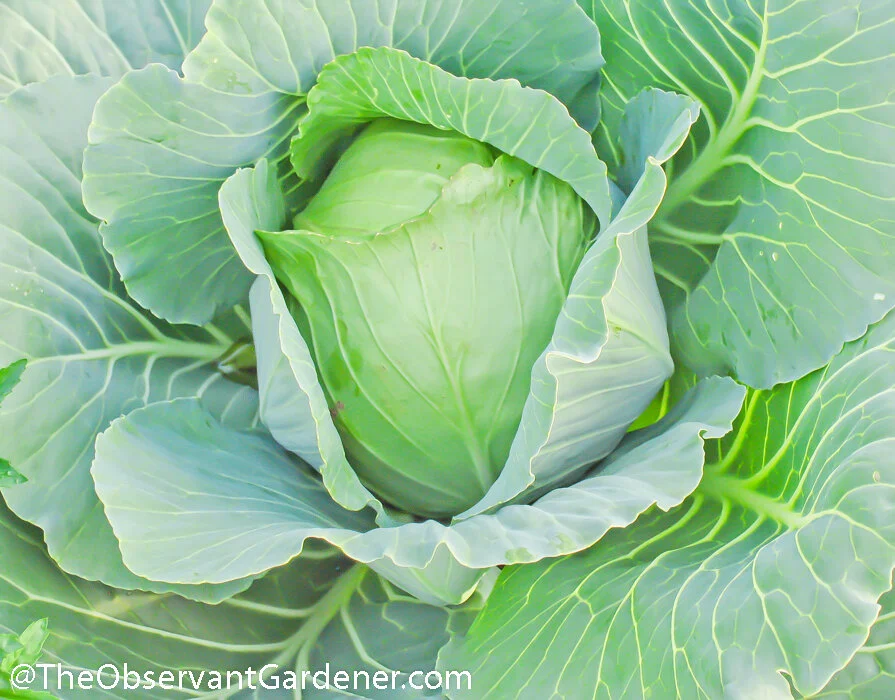
A large green cabbage head with leaves looks like a rose.

The first gatherings of the garden in May of salads, radishes and herbs made me feel like a mother about her baby—how could anything so beautiful be mine?
- Alice B. Toklas

I discovered the beauty of vegetables by growing them. For years I grew only flowers, but one day I decided to grow vegetables in order to see them in their natural state. Too many vegetables in the supermarket are cut up and wrapped; they are only a small part of the whole plant.

Growing vegetables from seeds is magical. A tiny seed contains an amazing amount of energy and potential. A small plot of dirt, carefully tended, can yield a bounty of attractive and nourishing plants. I observe their forms carefully as I perform my routine garden chores and appreciate their appearance as nature intends it.

Observe Vegetables in the Garden

Before I started growing vegetables, I had never seen an entire broccoli plant in a garden. The broccoli crown, the part we eat, emerges in the center of a majestic plant with silver green leaves that reach out in a circular pattern for about three feet. It looks like a miniature helicopter, ready to spin its leaves and levitate!

I discovered that cabbages have a rosebud shape with many curves and swirls in addition to impressive spreading leaves. While I think all cabbages are beautiful, certain varieties of red cabbages stand out, with lavender veins and pale blue leaves. Another fascinating cabbage is the Savoy, with its crinkly texture.

Swiss chard has large leaves with veins that can be either green or dark red. Lacinato kale, on the other hand, has long thin leaves and light veins. Squash has vines that stretch over the garden, reaching with their tendrils and showing off dozens of bright orange flowers. Sugar snap peas cling to the trellis, producing dozens of white flowers that turn into delicious pods. Lettuces start from tiny seeds and grow into plants with delicate leaves.

Brussels sprouts grow on tall stalks with large, curving leaves, not looking at all like the small round objects that we see in the supermarket. Okra produces yellow blooms that are similar to the hibiscus, which turn into pods that can be green or burgundy. Tomatoes come in many sizes, shapes and colors. The variety of vegetables is almost endless.

Notice the Details in Vegetables

Early morning and dusk are the two times of day when I like to observe my plants. I bend down low to get close to them. Their different shapes and sizes, their coloring and even the details of the veins in the leaves amaze me.

These observations, studying highlights and shadows, curves and shapes, have made me realize the perfection of nature's designs. That vegetables sustain us spiritually and nutritionally makes them special. As I eat the vegetables I grow, they burst with flavor, moisture and tenderness. My relationship with my garden and its bounty is reciprocal: I nourish my plants as they grow and in turn, they nourish me.

This article also appears in The Laurel of Asheville. Follow @TheObservantGardener on Instagram to see new garden photos daily!

Comment
← Newer Posts
Summary Block
This block is invalid. Please check the block settings and try again.
Featured
Aenean eu leo Quam
Aenean eu leo Quam

Quisque iaculis facilisis lacinia. Mauris euismod pellentesque tellus sit amet mollis.

Read more →

Download My Free Guide To Growing Moonflowers

 
Cover of A Guide To Growing Moonflowers
 
Newsletter Block
This newsletter signup form needs a storage option. Edit the block and enter a storage location via the Storage tab.

Download your FREE Guide to Growing Moonflowers now and start your journey toward a more enchanting garden.

Sign up to receive the guide and my monthly blog.

I respect your privacy and do not share your email address with anyone.

Thank you! Please check your email for a link to your free Moonflower Guide.

© Copyright 2026 Judith Canty Graves
Logo design by The Laurel of Asheville